Astro Logs

Insights into the universe and the tech that reaches it.

Visual representation of Reading the Heat of StarsVisual representation of Reading the Heat of Stars

January 18 , 2026

Reading the Heat of Stars

Stars reveal their secrets through light. Using Wien’s displacement law, astronomers decode a star’s color to estimate its temperature, classify it on the H–R diagram, and understand its life cycle—proving that careful observation and simple physics can unlock the universe’s deepest mysteries.

Visual representation of Planet Nine: The Hidden GiantVisual representation of Planet Nine: The Hidden Giant

January 11 , 2026

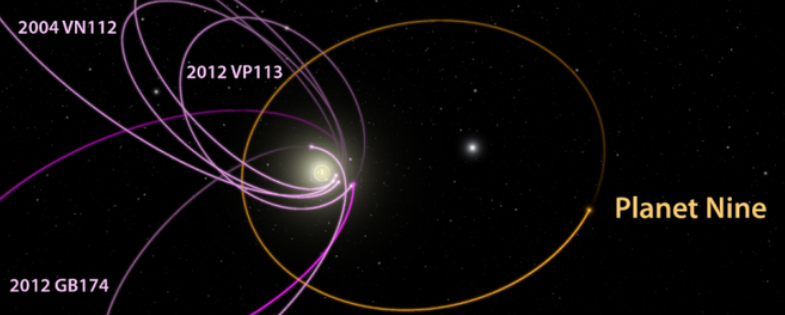
Planet Nine: The Hidden Giant

Some discoveries are not made by seeing, but by understanding their influence. *Planet Nine* remains unseen, yet its possible presence could reshape our understanding of the Solar System. This exploration brings together science, evidence, and unanswered questions behind one of astronomy’s most compelling and debated hypotheses today.

Visual representation of The Lifecycle of Nebulae in the Universe Visual representation of The Lifecycle of Nebulae in the Universe

January 4 , 2026

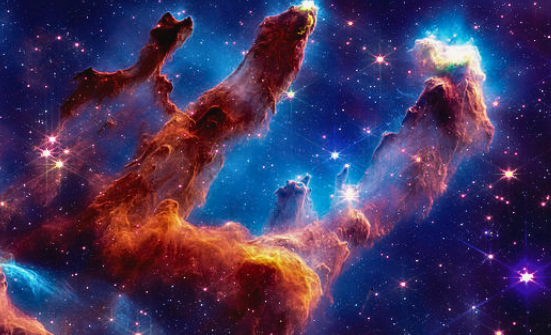
The Lifecycle of Nebulae in the Universe

Nebulae are active nurseries where gas and dust are compressed into stars. Radiation triggers ionization, revealing chemical maps through vibrant colors. Over millions of years, stellar feedback clears the cosmic fog, transforming chaotic clouds into stable planetary systems that enrich the galaxy.

Visual representation of Telescopes or Time Machines? Visual representation of Telescopes or Time Machines?

December 28 , 2025

Telescopes or Time Machines?

Do telescopes simply collect light, or do they let us see into the past? By exploring relativity, cosmic redshift, and how photons travel through space, this article explains how instruments like the James Webb Space Telescope reveal the early universe, transforming distant galaxies into snapshots of cosmic history rather than real time travel.

Visual representation of JWST’s Most Recent Discoveries Visual representation of JWST’s Most Recent Discoveries

December 21 , 2025

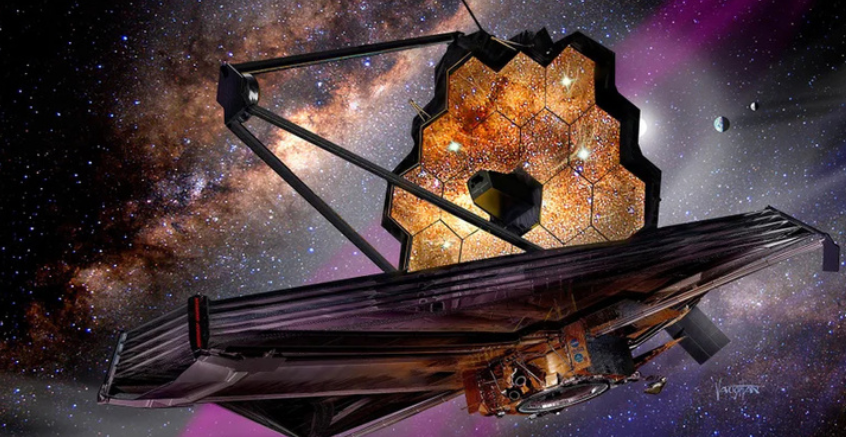
JWST’s Most Recent Discoveries

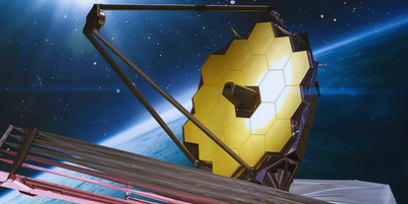
Since 2021, the James Webb Space Telescope has revolutionized astronomy. It recently confirmed a runaway supermassive black hole creating a massive trail of new stars. Furthermore, JWST observations provide evidence for primordial Population III stars, massive hydrogen-helium giants that mark the universe's first light . . .

Visual representation of DART Mission Triumphs:  Successful Asteroid DeflectionVisual representation of DART Mission Triumphs:  Successful Asteroid Deflection

December 14 , 2025

DART Mission Triumphs: Successful Asteroid Deflection

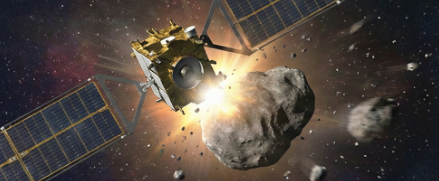
NASA’s DART mission marked a historic step in planetary defense by successfully altering the orbit of the asteroid moonlet Dimorphos through a deliberate kinetic impact. By demonstrating that an asteroid’s trajectory can be measurably changed, the mission provided the first real-world validation of a method that ...

Visual representation of ALAKNANDA: A Spiral From The Early UniverseVisual representation of ALAKNANDA: A Spiral From The Early Universe

December 8 , 2025

ALAKNANDA: A Spiral From The Early Universe

JWST observations reveal Alaknanda, a surprisingly mature spiral galaxy seen only 1.5 billion years after the Big Bang. Gravitational lensing exposed its disk, star-forming arms, and rapid growth, challenging long-held models of early galaxy formation and suggesting the universe built ordered systems faster than expected.

Visual representation of The Sun’s Strongest Flare of the year 2025Visual representation of The Sun’s Strongest Flare of the year 2025

November 30, 2025

The Sun’s Strongest Flare of the year 2025

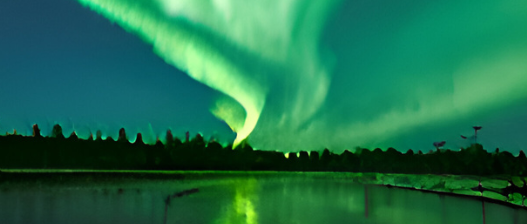
An intense X5.1 solar flare from region AR4274 caused major radio blackouts across Europe and Africa, followed by a CME that triggered a G3 geomagnetic storm and widespread North American auroras. The event highlighted rising solar activity and the need for better space weather readiness. Know more about . . . .

Visual representation of Gravitational Waves Explained- Spacetime RipplesVisual representation of Gravitational Waves Explained- Spacetime Ripples

November 23, 2025

Gravitational Waves Explained- Spacetime Ripples

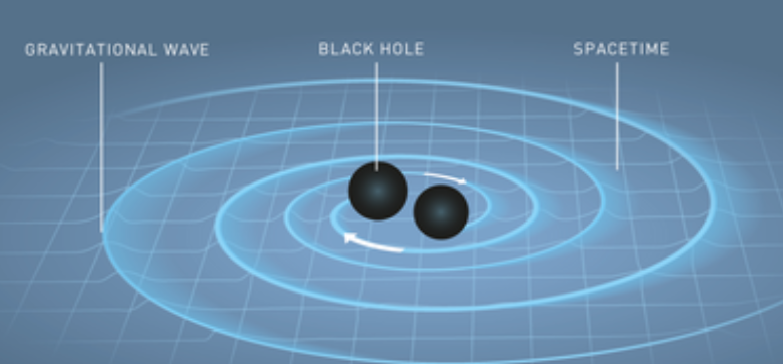
Gravitational waves are invisible ripples in spacetime produced by powerful cosmic events, such as merging black holes or supernova explosions. Detected by observatories like LIGO using laser-based instruments, these waves reveal how space stretches and squeezes. Their study helps scientists explore black holes .

Visual representation of Absorption Spectra: The Language of StarlightVisual representation of Absorption Spectra: The Language of Starlight

November 16, 2025

Absorption Spectra: The Language of Starlight

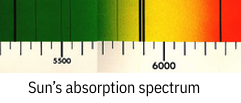
Absorption spectra let astronomers identify elements, track motion, and study the chemistry of stars, interstellar clouds, and exoplanet atmospheres. This article explains how these light patterns reveal the universe’s structure and how telescopes like Hubble and JWST use them to uncover distant cosmic details.....

Visual representation of Interstellar Visitor 3I/ATLAS: A Cosmic MessengerVisual representation of Interstellar Visitor 3I/ATLAS: A Cosmic Messenger

November 09, 2025

Interstellar Visitor 3I/ATLAS: A Cosmic Messenger

3I/ATLAS, discovered in July 2025, is the third confirmed interstellar object after ʻOumuamua and 2I/Borisov. With a hyperbolic orbit and an active cometary structure, it offers rare insights into primordial materials beyond our Solar System. Its study enhances understanding of interstellar origins and planetary formation processes.

Visual representation of Life's Final Element: Phosphorus Discovered on EnceladusVisual representation of Life's Final Element: Phosphorus Discovered on Enceladus

November 2, 2025

Life's Final Element: Phosphorus Discovered on Enceladus

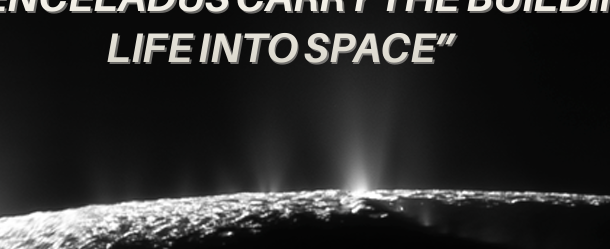
Using NASA's Cassini data, scientists found phosphorus in icy plumes from Saturn's moon, Enceladus. This discovery, originating from its hidden ocean, completes the full set of essential ingredients for life. The finding confirms Enceladus's ocean may be habitable, making it a prime target in the search for life.

Visual representation of Possible Life Traces on MarsVisual representation of Possible Life Traces on Mars

October 26, 2025

Possible Life Traces on Mars

NASA’s Perseverance rover discovered potential biosignatures in a Martian rock named Cheyava Falls. The sample, rich in organic compounds and minerals like vivianite and greigite, suggests ancient microbial activity. While further analysis on Earth is needed, this finding raises exciting possibilities about Mars’ long-term habitability and past life.

Visual representation of First-Ever Image of Two Orbiting Black HolesVisual representation of First-Ever Image of Two Orbiting Black Holes

October 19, 2025

First-Ever Image of Two Orbiting Black Holes

Astronomers have captured the first radio image of two supermassive black holes orbiting each other at the center of quasar OJ287, located 5 billion light-years away. This breakthrough, achieved using the RadioAstron telescope, confirms decades of theory and provides unprecedented insight into binary black hole dynamics.